The Evolution of Beer Menus in Bars
Beer menus in bars have shifted from chalkboards to digital displays over the last decade. Chalkboards had their time. One walk to the wall and the tap list was current enough for the night. But as of 2026, more bars update their menus on TVs, tablets, or guests’ phones than on anything with chalk. Some bars are stubborn about hanging on, but the direction is clear.
Why did chalkboard beer menus fade?
Chalkboards made updating the tap list simple. Erase, rewrite, done. They cost little and matched the look for bars that care about atmosphere. For regulars, the scrawled names and dollar signs felt familiar. For guests, they felt local.
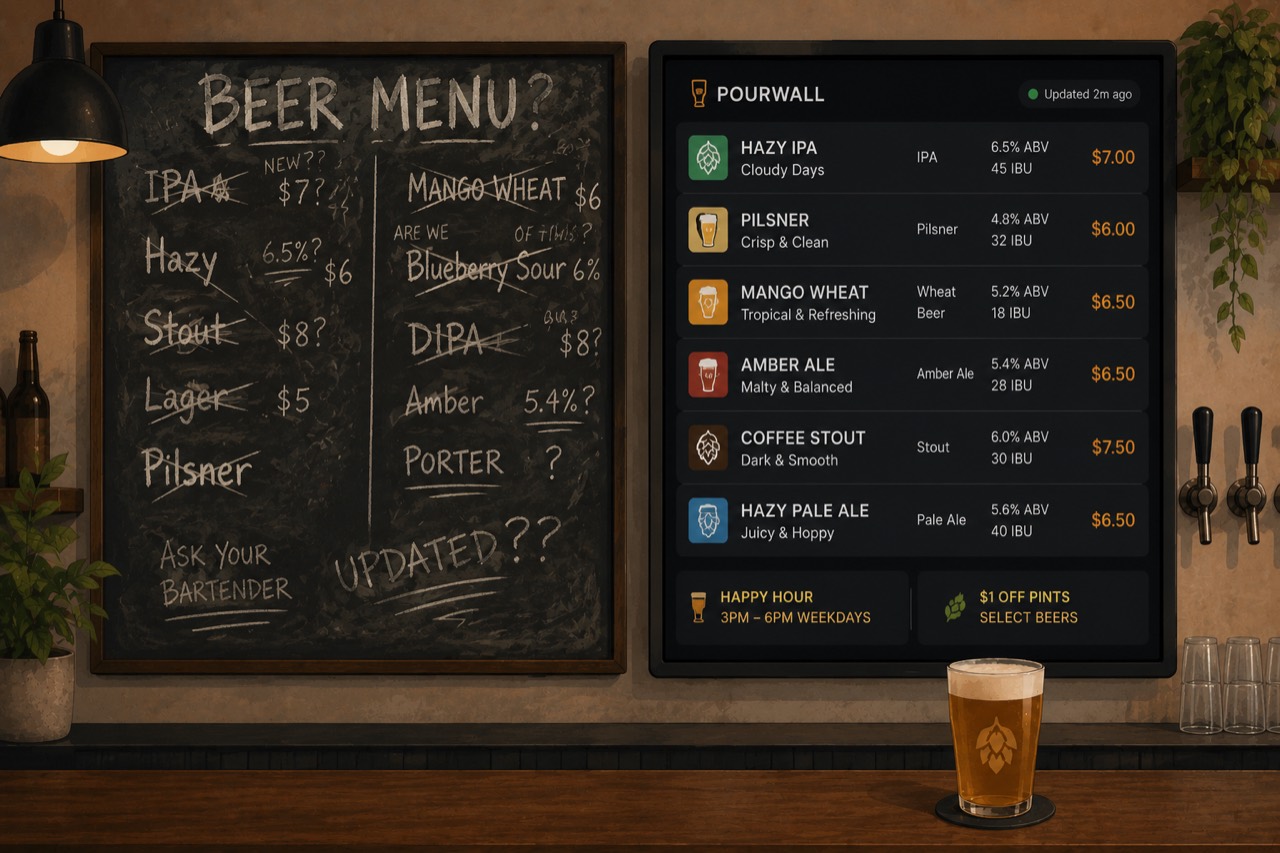
But chalkboards don’t keep up. In low light, half the menu fades to impossible scribble. One letter is bigger, another runs out of space. If the board sits outside, rain and humidity ruin yesterday’s details. If you change a price for Friday happy hour, it’s easy to forget to set it back Saturday. When you’re busy, updating the list takes time you don’t have. Misspell an IPA or leave a kicked keg on the board, and someone will notice. Worst case, a customer orders a beer you can’t pour. Now your staff is apologizing, not selling.
How do digital beer menus work in bars?
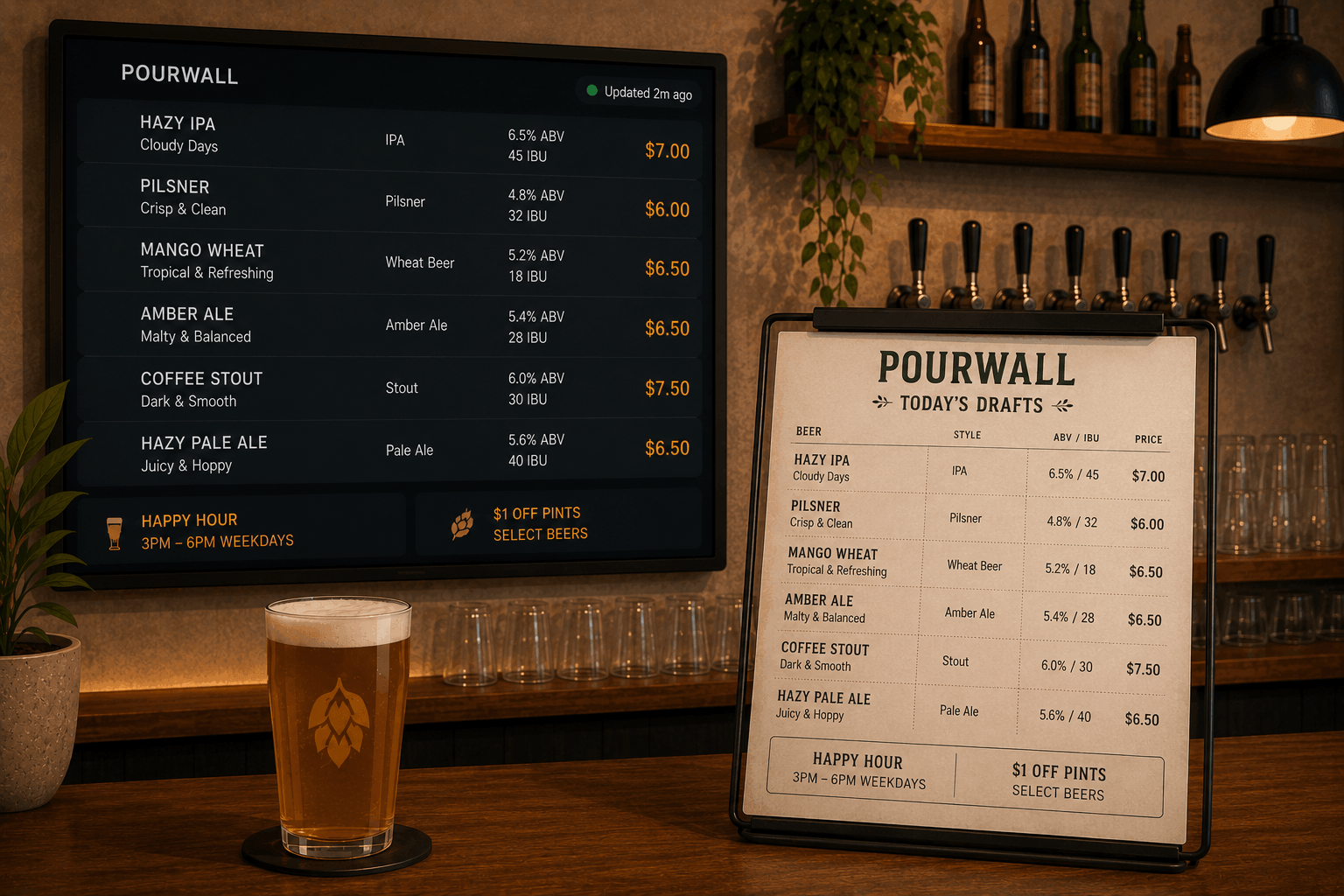
Digital beer menus let you update from anywhere with your phone, tablet, or laptop. Changes show up on the TV behind the bar, a guest’s phone by scanning a QR code, or on a printed menu if you want hard copies. There’s no chalk dust, no ladder. Updates can take seconds, even during a rush.
Everything is easier to read. Fonts render clean every time. Beer names, prices, and styles are easy to scan. Rotating brewery logos and seasonal specials stand out. If a keg kicks, the item disappears with one tap.
Bars usually run their digital menu on hardware they already have: TVs, tablets, sometimes cheap streaming devices like a Fire TV stick. The main cost is picking a platform. Over time, digital menus reduce sales lost to kicked kegs, cut errors, and keep new guests from leaving for a bar where the menu actually matches the taps.
What do bar owners prefer in 2026?
By 2026, most new bars skip chalkboards and start with digital menus. A 2026 industry survey found over 70 percent of new bar openings use some kind of digital display or phone-linked tap list instead of chalk. This includes chains and a rising number of small independent bars.
Bar owners point to faster updates, fewer guest complaints about unavailable beers, and less time spent rewriting the board when taps change. Typical feedback: staff don’t need to memorize what’s gone, guests aren't told “sorry, that one’s out,” and managers can make changes even when they aren’t in the building. For taprooms with high rotation, that’s sometimes the difference between a smooth night and frustration for everyone.
How does Pourwall make digital menus simple?
Pourwall is menu software built by people who spent too much time scraping chalk dust and apologizing for old TV menus. It turns any TV into a live beer menu. You set the look to match your bar: modern, retro, or in between.
Anyone on staff can update the list from their laptop or even phone. The menu is instantly live on your TV, on a QR code for guests to scan, or as a printout for the tables. (Yes, you can print menus that match the digital version; nothing gets lost in translation.) You can also embed the menu on your website, and the source list stays up to date everywhere. Plans start free, and paid plans don’t lock you in. No upsells during service. What stands out: it takes 10 minutes to set up, it runs on devices you already own, and the result doesn’t make your bar look generic. Ready to give it a try? pourwall.com.
Should your bar switch from chalkboards to digital beer menus?
If you’re tired of erasing old chalk or correcting mistakes that keep regulars joking and new guests leaving, digital menus are worth the change. They let you update beer lists fast, cut the confusion, and save time during your busiest hours. Pourwall exists for bar teams who want the flexibility of digital without the overhead of big tech or new gear. You can try it free.